Short on time?Read the 60-second summary
Jump to section
One of the most important decisions you will make when planning a Masai Mara safari is not necessarily which lodge you choose. It is how you will safari once you get there.
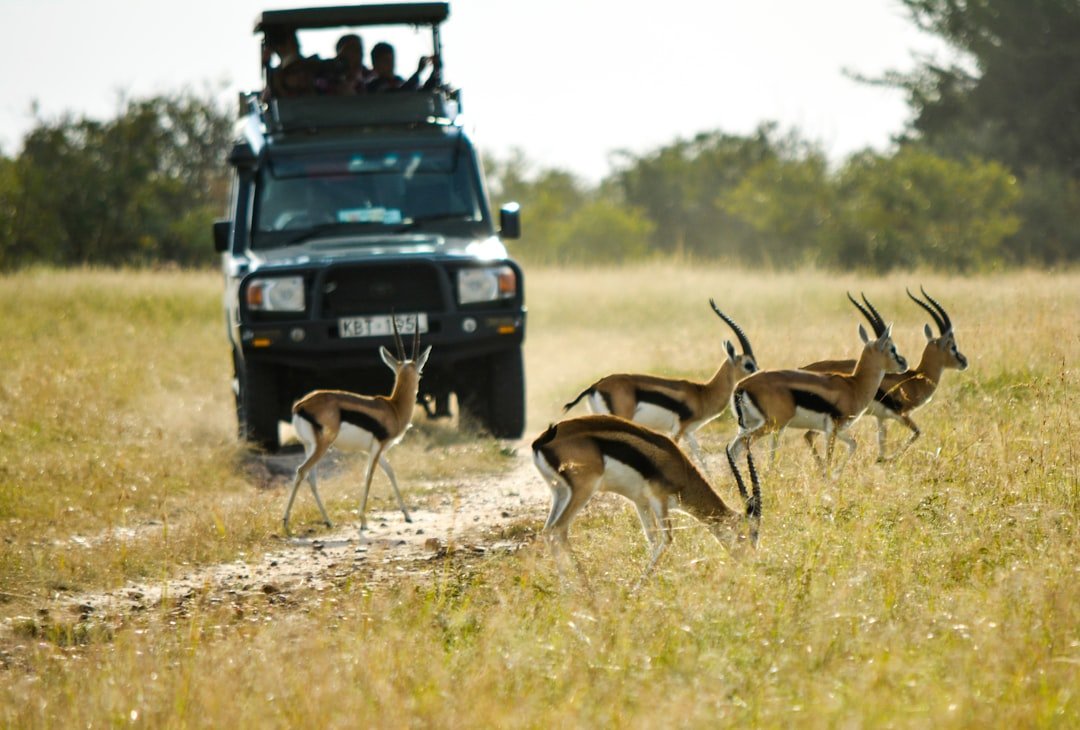
Most travellers spend far more waking time inside the safari vehicle than inside their room. The vehicle is where you watch lions hunt, wait for a leopard to emerge from a thicket, follow cheetahs across the plains, photograph elephants, eat lunch, talk to your guide and sometimes sit for twenty minutes doing absolutely nothing because everybody is waiting to see what happens next.
That means the number of people sharing that vehicle with you can influence your safari much more than whether your room has a freestanding bathtub.
Yet safari products are often described with vague labels such as private safari, shared safari, group safari and join-in safari. Those terms can describe very different experiences.
First, understand the three different products
Private safari
On a private safari, your party has the vehicle and guide to itself. That could mean a couple, a family, four friends, six photographers or even one solo traveller. There are no unrelated guests in the vehicle.
This gives you far more control over how the day works. If you want to leave earlier, you can. If you want to stay out all day, you can. If you want to sit with one lion pride for forty-five minutes, nobody outside your own group needs to agree.
That control is the real advantage of private safari — not magically better wildlife.
Shared lodge or camp vehicle
This is often a very good middle ground. You stay at a lodge or safari camp and share its game-drive vehicle with other guests who are staying at the same property. Everyone has roughly the same starting point, meals happen in the same place and the guide is usually part of the lodge or camp operation.
Occupancy varies. Some camps may place four guests in a vehicle, others six, and some premium camps deliberately keep numbers lower. So when somebody says “the safari is shared”, that does not automatically tell you whether the experience will feel crowded.
Join-in safari
This is the product behind many of the extremely cheap Masai Mara safari advertisements you see online. You are not booking the whole vehicle. You are booking one or two seats.
Other travellers book the other seats and the operator combines everyone into one departure. A join-in vehicle might contain an Indian couple, a solo European traveller, two backpackers, another couple and somebody who booked through a completely different agency.
Everyone joins the same safari because the vehicle cost is being spread across as many paying guests as possible. That is how the price becomes so attractive.
Why are some join-in safaris so ridiculously cheap?
The mathematics is fairly simple. A Land Cruiser costs money to operate whether two people or seven people sit inside it. The same guide is working and the fuel burn does not suddenly become seven times higher because there are seven guests.
So if that cost is divided among seven people instead of two, the per-person price falls sharply.
The operator then combines that with budget accommodation, fixed routing, standard meals, shared Nairobi transfers, fixed departure times, high vehicle occupancy and little or no customisation.
It is not automatically a scam. It is not automatically poor quality. It is simply a different economic structure.
The price can be genuine — but the arithmetic still has to make sense
This becomes especially important with current Masai Mara park fees. Park fees are a fixed cost. An operator can negotiate a hotel rate, share a vehicle, use a cheaper camp or reduce margins. They cannot simply wish park fees away.
If you see a deal claiming to include Nairobi transfers, two nights in the Mara, all meals, vehicle, guide, multiple game drives and park fees for an unbelievably low amount, ask exactly what is included.
Three days does not necessarily mean three full safari days
A typical 3-day / 2-night join-in safari may sound like three days in the Masai Mara. In reality, Day 1 is often Nairobi to Mara plus an afternoon game drive, Day 2 is the one proper full safari day, and Day 3 is breakfast and the long drive back to Nairobi, perhaps with a short activity depending on the programme.
That can still be excellent value. Just compare actual safari time rather than the number printed in the headline.
Private safari does not mean you automatically see more wildlife
A private vehicle does not unlock a secret reserve. The lions are the same lions, the roads are the same roads, and a great guide on a shared safari can absolutely outperform a poor guide in a private vehicle.
What private buys is control. And control can change the quality of a sighting enormously.
Imagine this very common safari situation
You find a leopard lying under a bush. At the moment very little is happening, but it may move. In a private vehicle, if everyone wants to wait, you wait. Twenty minutes later the leopard stands up, walks into the open and gives you the sighting you hoped for.
In a shared vehicle, three people may already have their photograph and want lions. Somebody else wants lunch. Another guest has been waiting for elephants all morning.
Nobody is wrong. They simply have different priorities.
Photography is where private safari becomes much more valuable
For a serious photographer, the benefit of private safari is far greater than it is for a casual visitor. Photography is about angle, light, background, distance, behaviour, timing and vehicle position.
Sometimes moving the vehicle five metres changes the photograph completely. Sometimes you need the animal on the opposite side. Sometimes you need to wait for everybody else to clear the sighting. Sometimes nothing happens for twenty minutes and then everything happens in ten seconds.
Vehicle occupancy matters more than a “window seat”
Many join-in safaris promise a guaranteed window seat. That sounds good, but a safari vehicle is not an airline cabin. At many sightings, guests are standing through the pop-up roof and everybody wants the same clean angle and roof space.
If seven or eight people are trying to use the same roof opening, having a theoretical window seat does not solve the real problem.
For photographers, the better question is: how many guests maximum will be in the vehicle?
Eight people feels very different from four
With four guests, everyone can usually move more easily, camera equipment has space, roof access is simpler and conversation with the guide feels more personal.
With seven or eight guests, bags take space, people block one another, every stop becomes a group decision and photography becomes harder. For a casual sightseeing safari, this may be acceptable. For somebody travelling specifically for wildlife photography, it can become frustrating.
Families benefit from private vehicles in a completely different way
For families, the main benefit is flexibility. Children may need toilet breaks, snacks, shorter drives, a late start, an early return, a nap or simply a break from the vehicle.
In a private vehicle, none of this becomes a problem for strangers. You adapt the day around your family.
Parents also relax more
Parents do not have to worry about inconveniencing unrelated guests. A child can talk, ask questions, eat, move around, fall asleep or need a break without turning it into somebody else’s problem.
Couples have a more difficult cost decision
For two adults, private safari is relatively expensive because the entire vehicle cost is being divided between only two people. This is where shared game drives can make a lot of sense.
If you are a couple who is not heavily into photography, does not mind a shared schedule, enjoys meeting other travellers and is happy to compromise occasionally, a good shared lodge vehicle can be excellent value.
Solo travellers are where join-in safaris make the strongest case
A solo traveller paying for an entire private Land Cruiser can face a very high per-person cost. Join-in safaris solve exactly that problem. You buy one seat and the operator fills the others.
For a backpacker, student or solo traveller on a limited budget, that can be the difference between seeing the Mara and not seeing it at all. In that situation, we would much rather see somebody take a well-run join-in safari than miss the Mara completely.
A join-in safari can also be social
Some travellers genuinely enjoy this part. You meet people from different countries, eat together, share sightings and swap stories. The structure that frustrates a photographer can be enjoyable for a solo traveller who does not want to spend three days alone with a guide.
But everybody in the vehicle may want a different safari
Imagine one vehicle containing a birder who wants raptors and small species, a photographer who wants to wait for behaviour, a first-timer chasing lions and elephants, and a family whose children want to return for lunch.
All of them are reasonable. They are simply not trying to have the same day.
Toilet breaks sound unimportant until you need one
On a private safari, toilet stops are simple. On a group vehicle, every stop affects everyone. One person may need a break while another wants to continue because there is a reported cheetah sighting ahead. It is not catastrophic; it is simply part of travelling with strangers.
Lunch becomes another shared decision
Suppose you are watching lions beginning to hunt around lunchtime. In a private vehicle, everyone can decide to eat later. If the children are hungry, you can eat now. In a shared vehicle, the broad plan belongs to the group.
Shared lodge vehicles are often far better than cheap join-ins
If you share a vehicle directly through a good lodge or camp, everyone starts from the same accommodation, meal schedules are aligned, the guide is usually part of the camp operation and vehicle standards or occupancy may be better controlled.
That is a completely different experience from an eight-seat Nairobi join-in safari.
“Group safari” can mean something different in India
An Indian operator may advertise a group departure where 12–20 guests travel together, several Land Cruisers are used, everybody stays at the same lodges and there may be a tour leader.
That is not the same as a Nairobi join-in safari, where the operator may simply be filling empty seats across unrelated bookings.
Join-in safaris can involve several companies behind the scenes
At the budget end, the company you pay may not operate every component directly. The seller may use partner operators, shared vehicles, subcontracted guides, pooled departures and common budget camps.
This is not automatically suspicious, but it makes clarity more important. Ask who operates the vehicle, what camp is confirmed, who your emergency contact is and what happens if a departure does not fill.
Budget accommodation is part of how the cheap price works
Very cheap join-in packages usually use basic camps, commonly outside the reserve near areas such as Talek or Sekenani. That reduces accommodation cost considerably.
There is nothing inherently wrong with that. We spent many of our own early photography trips staying in basic camps because we cared more about time in the field than room luxury. But budget means you should expect compromise in some combination of room finish, food, electricity, hot water, location or service.
Safari vans versus Land Cruisers
Some lower-cost programmes use safari vans, others Land Cruisers. A van can absolutely deliver good sightings, but Land Cruisers generally have advantages in rough terrain, clearance, mud and difficult wet-season tracks.
If an itinerary just says “safari vehicle”, ask what that actually means.
Very cheap does not mean bad
A brilliant guide with a basic camp can give you an extraordinary wildlife experience. A weak guide paired with an expensive lodge can give you a mediocre one. Wildlife does not care what you paid for your room.
The compromises on a budget safari are usually in accommodation, vehicle occupancy, flexibility, transfers, food, schedule and personal attention — not necessarily wildlife.
What should make you suspicious is not “cheap”
It is unclear. A legitimate operator should be able to tell you the camp, vehicle type, maximum occupancy, whether park fees are included, number of game drives, meals, local payments and who operates the safari.
Private safari can also be poor value
Paying more does not automatically make the trip better. You can still end up with poor routing, an inexperienced guide, too much driving between parks or a badly located lodge. Private is valuable only when the freedom is used well.
When we strongly prefer private safari
We think the premium is particularly worthwhile for serious photography, families with younger children, travellers doing several full-day drives, birders or specialist wildlife travellers, and groups of four to six where the vehicle economics improve considerably.
When shared safari makes excellent sense
Shared works very well for solo travellers, couples, budget-conscious first-timers, easygoing travellers and shorter safaris where customisation matters less.
When join-in makes sense
Join-in makes sense when cost is the main constraint. You accept strangers, a fixed itinerary, budget accommodation, higher occupancy and limited customisation in return for a much lower price.
When join-in is probably the wrong product
We would think carefully if you are a serious photographer, travelling with young children, very particular about timings, expecting highly personalised service or easily frustrated by other people’s delays. The entire join-in model depends on sharing.
Private vs shared vs join-in at a glance
| Private | Shared camp vehicle | Join-in | |
|---|---|---|---|
| Cost | Highest | Medium | Lowest |
| Strangers | None | Usually a few | Often several |
| Schedule control | Excellent | Moderate | Low |
| Photography | Best | Often good | Most compromised |
| Families | Excellent | Depends | Least flexible |
| Solo value | Weak | Good | Excellent |
| Accommodation | Your choice | Your camp | Usually fixed |
| Wildlife access | Same ecosystem | Same ecosystem | Same ecosystem |
Our practical verdict
If budget allows and you value control, choose private. If you want a sensible balance between price and quality, a good shared camp vehicle can be excellent. If your main priority is simply getting to the Mara at the lowest realistic cost, a legitimate join-in safari can be fantastic value.
The cheapest safari is not automatically bad. The most expensive safari is not automatically good.
The real question is: where have the compromises been made to achieve the price — and are those compromises important to you?
For the practical side of that decision, read our Masai Mara game-drive guide and Reserve vs Conservancy comparison.