
Masai Mara Great Migration: When to Go, Where to Stay & How Crossings Really Work
The migration is not a single event, one river crossing or one fixed week in August. It is a year-round movement across the Serengeti–Mara ecosystem, driven by rain, grass and water.
Every year, vast herds of wildebeest and zebra move through Tanzania and Kenya in search of fresh grazing.
The Masai Mara becomes most relevant when large numbers move into the northern Serengeti and Kenya, usually from around July into September or October.
But the exact timing shifts every year.
The most important thing to understand:
The Great Migration is a movement, not a timetable.
You can plan for the right season and geography. You cannot book a guaranteed river crossing.
Quick answer
Best overall Mara window
Late July to September usually offers the strongest combination of large herd concentrations and Mara River crossing opportunities.
Can crossings happen in July?
Yes. In some years the first herds arrive surprisingly early. Rainfall and grazing determine movement, not the calendar.
Is August guaranteed?
No. August is statistically a strong migration month, but no one can promise a crossing on a specific day.
September
Often excellent. Herds can remain widespread and repeated river movements may still occur.
October
A transition month. Herds may still be present, especially early, but southward movement increasingly becomes possible.
Best planning principle
Choose the right month + area + number of safari days, not one supposedly magical crossing date.
The migration cycle: where the herds are through the year
Calving season across the southern plains and Ndutu region. This is not the Masai Mara phase.
Herds begin leaving the southern plains as rains and grazing patterns change.
Large concentrations move through western Serengeti toward the Grumeti system and farther north.
Herds begin reaching northern Serengeti, the Mara River system and, in some years, Kenya surprisingly early.
The classic Mara River-crossing period, with animals distributed across both sides of the Kenya–Tanzania border.
Animals may remain across the Mara and northern Serengeti, crossing and recrossing as conditions change.
Increasing rains farther south encourage the herds back toward Tanzania.
The cycle continues toward the eastern and southern Serengeti.
In any particular year the herds may move earlier, later or split across several areas at the same time.
What happened in 2026?
2026 is a good example of why fixed-date migration advice is unreliable.
Mara Conservancy reported the first wildebeest herds in the Mara Triangle during June. By the end of June, a few thousand animals were already present, and the first animals crossed Sand River into the Main Reserve on 28 June 2026.
That is earlier than the simplistic “migration starts in August” version often repeated online.
The Mara River crossing: what travellers misunderstand most
A river crossing is not one giant event where the entire migration crosses once from Tanzania into Kenya.
Herds can split
Different groups can be kilometres apart, moving on different routes and reaching the river at different times.
They can wait
A herd may gather near the river for hours — or longer — without crossing.
They can recross
Wildebeest can cross the Mara River more than once as grazing conditions and herd pressure change.
A crossing cannot be scheduled
No ethical guide, camp or tour company can tell you that a crossing will happen at 10:00 on your second safari day.
Why some people spend three days in the Mara and still miss a crossing
Because being in migration season is not the same thing as being beside a crossing at the right moment.
Geography
The active herds may be on the opposite side of the ecosystem from your lodge.
Timing
The herd may have crossed before you arrived — or wait until after you leave.
Safari structure
A restrictive game-drive schedule can make it harder to react when the migration is moving.
More well-positioned safari time gives you more chances to be in the right place when something happens.
Where should you stay for the migration?
There is no single “best migration lodge.” The correct location changes with herd position and the experience you want.
- Mara Triangle / western Reserve: strategically strong for sections of the Mara River and western migration geography.
- Central Reserve: broad access to classic Mara game-viewing areas and useful flexibility when herds spread.
- Northern / eastern conservancies: excellent resident wildlife and lower-density safari experiences, but Reserve days may still matter if river crossings are the main objective.
See our Reserve vs Conservancy guide before choosing the lodge purely because it says “migration camp.”
Mara Triangle or Main Reserve for crossings?
Both can be relevant. The Mara River runs through a large cross-border ecosystem, and crossing activity depends on where the herds are approaching the river.
Mara Triangle
Excellent access to important western river sections and often a very strong migration base when herds are concentrated in that part of the system.
Main Reserve
Other important crossing areas and broader access to eastern/central Mara geography can become more useful depending on herd position.
Do not select a lodge using only the phrase “near the Mara River.” Ask which river section, what access the vehicle has, and how long it takes to reach likely migration areas.
What about the northern Serengeti?
This is another reason the Kenya-only version of the migration story is incomplete.
The Mara River also runs through northern Serengeti in Tanzania. During July–September, large numbers of wildebeest may be on the Tanzanian side, the Kenyan side, or split across both.
Herds also cross and recross the river within Tanzania. You do not need the whole migration to “enter Kenya” for spectacular Mara River activity to occur.
How many nights should you stay during migration season?
2 nights
Very short. You can have an excellent safari, but there is little margin if a crossing is the main objective.
3 nights
A practical minimum for many travellers, particularly if the lodge is strategically located and game-drive time is flexible.
4 nights
Much stronger for a migration-focused trip because you have more complete safari days and more time to respond to herd movement.
This is why driving versus flying also matters on a short migration itinerary: transfer time can materially reduce your useful safari window.
Should you spend the whole day waiting at the river?
Not automatically.
A good guide balances current herd information against the wider safari. If there is strong evidence that a large herd is approaching a crossing, waiting can make sense. If the animals are kilometres away and settled, sacrificing an entire day beside an empty river may not.
Good migration guiding
Uses local reports, tracks, herd direction, weather and current movement to make a judgement.
Poor migration guiding
Drives straight to a famous crossing point every morning because that is where tourists expect to go.
Migration season is also peak crowd season
The famous migration months attract the highest demand, especially around well-known river sections and major predator sightings.
That affects:
Price
Accommodation and Reserve costs are higher in the peak period.
Vehicle density
Popular sightings and crossing areas can attract many safari vehicles.
Availability
The best-positioned camps and rooms may sell out far in advance.
See Masai Mara Safari Cost for how migration season changes the complete safari price.
Migration does not mean “better wildlife” everywhere
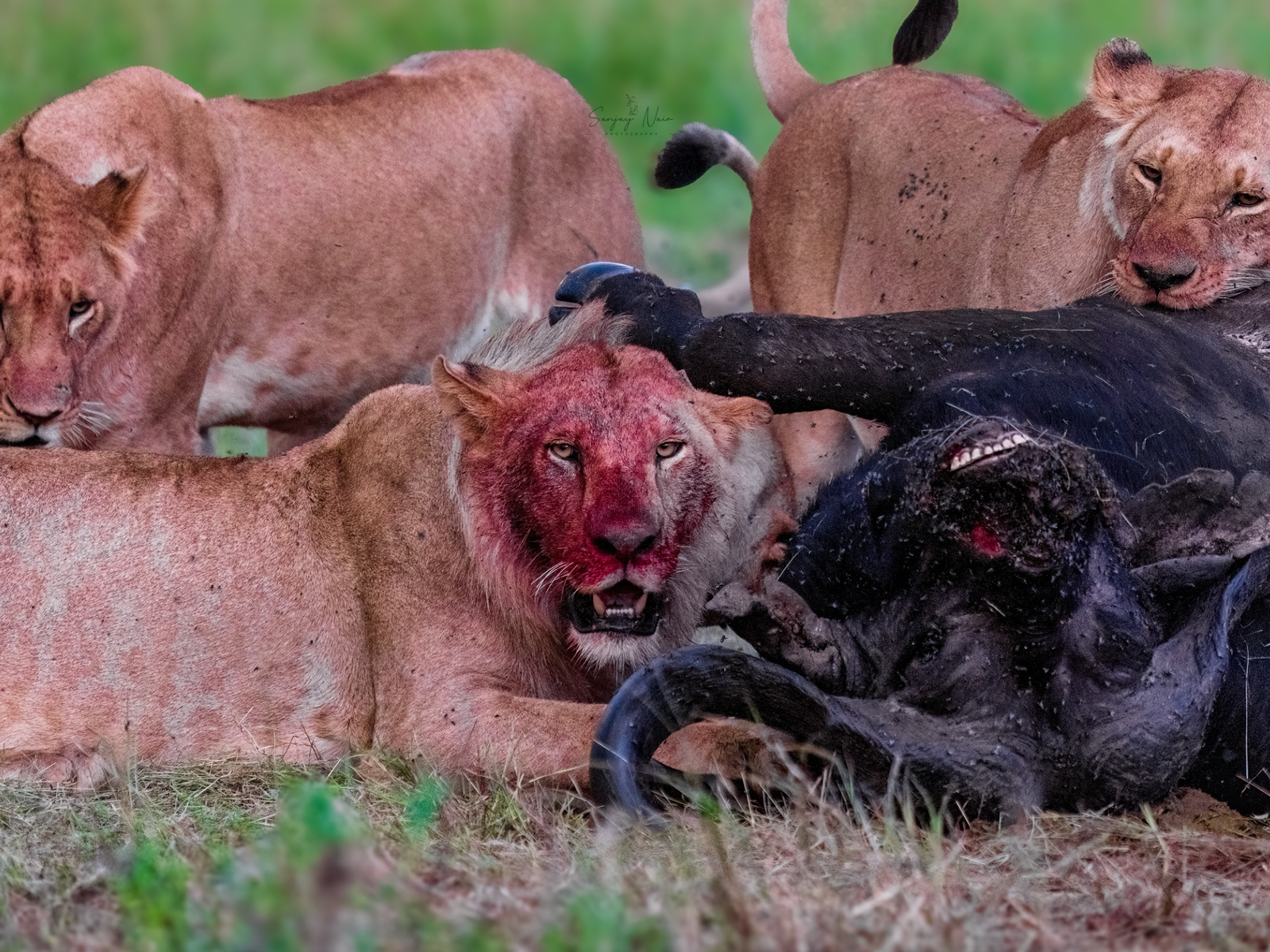
The migration adds extraordinary numbers of wildebeest and zebra — and creates dramatic predator/prey interactions.
But the Mara already has strong resident wildlife year-round.
If your dream is huge herds and the possibility of a river crossing, migration season is different.
For the wider seasonal picture, read Best Time to Visit Masai Mara.
Best migration period by objective
| Objective | Window to consider | Important caveat |
|---|---|---|
| First herds reaching Kenya | Late June–July in some years | Highly variable; early herds do not mean the whole migration has arrived |
| Highest crossing probability | Late July–September | No crossing can be guaranteed on a specific day |
| Large herd concentrations | August–September | Herds may be split between Kenya and Tanzania |
| Potentially calmer migration experience | September | Still peak season and location remains critical |
| Late-season possibility | Early October | Increasingly unpredictable as southward movement begins |
| Calving | January–March | Southern Serengeti / Ndutu, not Masai Mara |
How to improve your chances of a memorable migration safari
- Travel in a statistically strong window rather than chasing one exact date.
- Choose accommodation for geography, not only brand name.
- Give yourself enough full safari days.
- Use a flexible, experienced guide rather than a rigid game-drive timetable.
- Understand whether your camp has Reserve access and whether those fees are included.
- Accept that wildlife decides whether a crossing happens.
Our practical recommendation
If crossings are the priority
Target late July to September, stay strategically and aim for at least three — preferably four — nights.
If general wildlife matters more
Do not pay the migration premium automatically. June, January and February can be outstanding.
If you hate crowds
Consider a conservancy stay with carefully planned Reserve days rather than spending every night in the busiest crossing zones.
Planning this with Safari Lab
Safari Lab plans migration-focused safaris around the likely herd zone, trip dates, lodge location and the need to protect enough full game-drive time rather than promising a river crossing on a fixed day.

4.9/5 · 157 reviews
Frequently asked questions
When is the Great Migration in Masai Mara?
Large migration herds usually reach the Mara ecosystem from around July, with late July through September generally the strongest period. Timing changes each year.
What is the best month for a Mara River crossing?
August and September are statistically strong, but crossings can occur in July and sometimes into October. No particular day is guaranteed.
Can I guarantee a river crossing?
No. River crossings are spontaneous wildlife events.
Does the entire migration cross into Kenya?
No. Herds split across the northern Serengeti and Masai Mara, and some may remain on the Tanzanian side.
Can wildebeest cross the Mara River more than once?
Yes. Herds can cross and recross as grazing, water and herd movement change.
Is Mara Triangle best for migration?
It can be excellent for important western river sections, but the best area depends on current herd position.
How many nights should I stay?
Three nights is a practical minimum for many travellers; four gives a stronger migration-focused safari window.
Is migration season good for predators?
Yes. The huge prey concentrations create intense predator activity, although resident predators are present year-round.
Is October too late?
Not necessarily, especially early October, but the probability of southward movement increases and migration geography becomes less predictable.
Bottom line
The Great Migration is extraordinary because it is wild, not because it is predictable.
You can choose the right season, the right part of the ecosystem and enough safari time. What you cannot do is reserve a river crossing like a theatre seat.