Best Time for an African Safari: Month by Month
The best month depends on the country and what you want to see. Migration, green-season photography, dry-season concentration, gorillas, desert travel and beach weather all peak at different times.
There is no single best safari month for all of Africa
July and August are famous for a reason, but they are not universally “best”. They can be excellent for dry-season wildlife viewing in much of East and southern Africa, but they also bring higher prices and heavier demand.
January to March can be exceptional in the southern Serengeti because of calving. April and May can offer dramatic skies, greener landscapes and fewer vehicles. Botswana’s flood dynamics add another seasonal layer, while Namibia and South Africa follow different regional patterns again.
Choose the month based on the wildlife experience you want, then choose the country. Do not choose a famous country first and try to force your dates into its “best season”.
A practical safari calendar
| Period | Strong choices | Why go |
|---|---|---|
| January–February | Tanzania, Kenya, South Africa | Calving season in the southern Serengeti; good resident wildlife elsewhere; warm summer conditions in southern Africa. |
| March | Tanzania, Kenya | Good wildlife with changing weather and fewer peak-season crowds in some areas. |
| April–May | Kenya and Tanzania for value-minded travellers | Green landscapes, dramatic light, fewer vehicles and lower rates in many properties, though rain can affect roads. |
| June | Kenya, Tanzania, Botswana | Drying conditions begin to improve visibility; northern migration movement becomes more relevant. |
| July–August | Kenya, Tanzania, Botswana, South Africa | Classic dry-season conditions, strong game concentration and peak migration interest. |
| September–October | Kenya, Tanzania, Botswana, Namibia | Excellent dry-season wildlife with strong visibility and water-source concentration in many regions. |
| November | Kenya, Tanzania, South Africa | Short rains return in parts of East Africa; fresh landscapes and lower demand can make this attractive. |
| December | Kenya, Tanzania, South Africa | Festive demand rises, but wildlife remains strong and green-season conditions can be beautiful. |
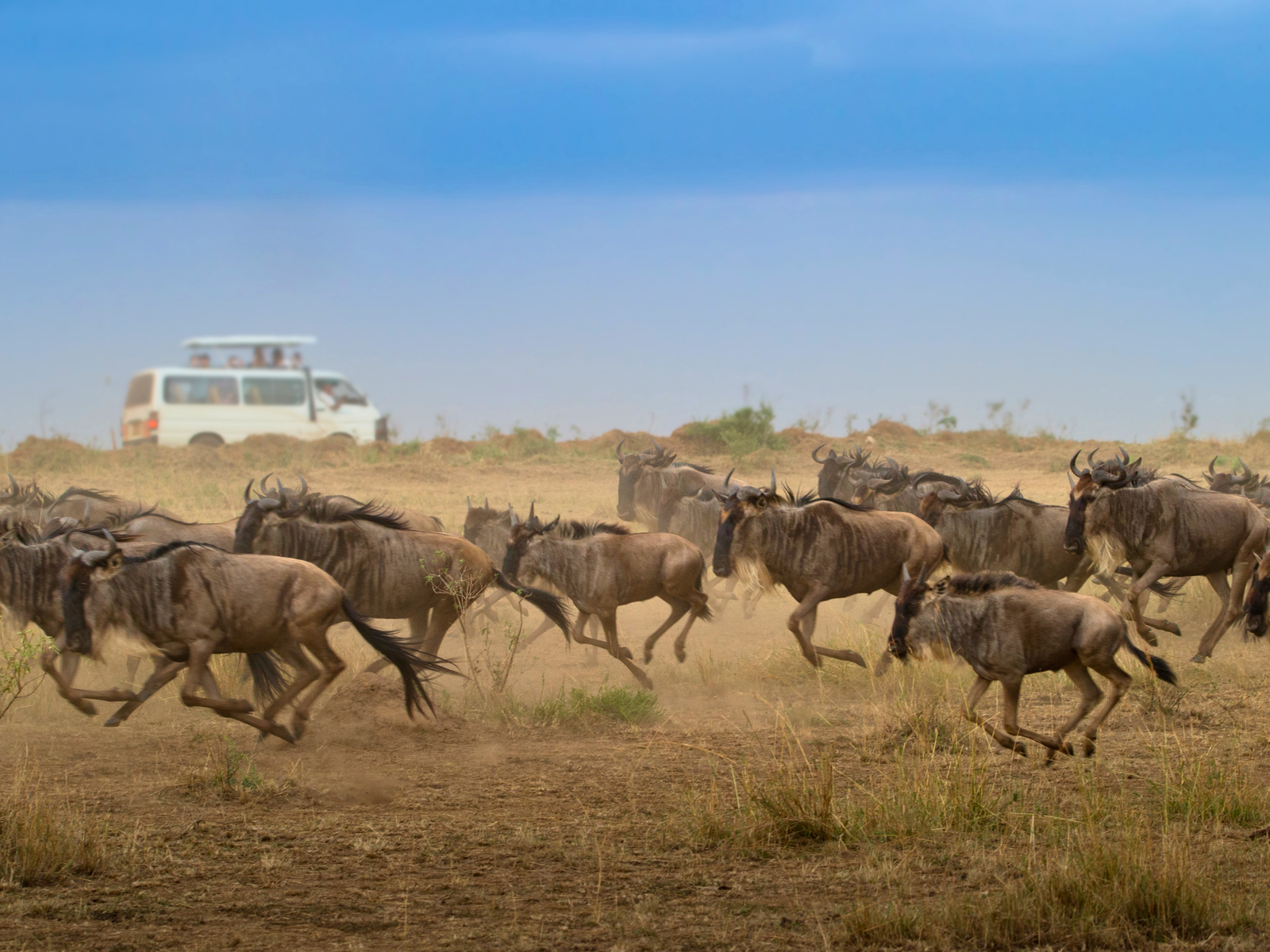
Migration timing is a moving target, not a fixed appointment
The migration moves through the Serengeti–Mara ecosystem throughout the year. The southern Serengeti is especially important during calving season, while the northern ecosystem becomes the focus later in the year.
No operator can guarantee a river crossing on a specific day. See our Great Migration guide for the detailed version.
The “best season” changes with the trip
Green season can be underrated
Cloud texture, clean air, fresh landscapes and fewer vehicles can produce better photographic conditions than peak season for some travellers.
Dry season is the easiest introduction
Visibility is generally better and wildlife concentration around water can make game viewing more straightforward.
Shoulder months deserve attention
Lower lodge rates and fewer guests can outweigh a higher chance of rain when the goal is a quieter trip rather than a famous migration moment.
When to choose the Masai Mara
The Mara is a year-round wildlife destination. July to September attracts the most attention because of the migration, but resident predators, elephants and plains game remain throughout the year.
January to March can be dry and productive. April and May are wetter but can be beautifully green and much quieter. June is often an excellent transition month, while October can still be strong as migration dynamics shift.
For the detailed local view, use our Best Time to Visit Masai Mara guide.
Serengeti timing depends on which region matters
Tanzania’s strength is that the Serengeti migration story unfolds across different regions through the year. The southern plains become especially important during calving, central Serengeti remains valuable for resident wildlife, and the northern areas matter later as the herds move toward the Mara ecosystem.
That is why “best time for Tanzania” is too broad. The route and camp position should follow the month.
Southern Africa runs on a different seasonal rhythm
Botswana: dry-season wildlife viewing is excellent, but the Okavango flood cycle can create very different experiences depending on when and where you travel.
South Africa: many safari regions are strong through the dry winter months, while summer brings greener landscapes and different birding and photographic conditions.
Namibia: cooler dry months make long road travel easier, while wildlife around water sources can become more predictable in arid regions.
Fixed dates are not a problem — they simply change the destination choice
If your leave dates are fixed, we do not tell you that you have chosen the “wrong month”. We look at which destination is strongest for that window and build around the seasonal reality.
That may mean Kenya in one month, Tanzania in another, or southern Africa when East Africa is less aligned with the experience you want.
Rainfall, herd movement and wildlife behaviour vary from year to year. Use seasonality to improve the odds, not to promise a scheduled natural event.
Frequently asked questions
What is the best month for an African safari?
July to September is one of the strongest all-round windows for classic dry-season wildlife, but January to March, shoulder seasons and green seasons can be better for specific destinations and goals.
Is July the best month for safari?
It is excellent in many East and southern African destinations, but it also brings higher demand and prices. It is not automatically the best value or best photography month.
When is the Great Migration best?
The best location changes through the year. Southern Serengeti is especially important during calving season, while northern Serengeti and Masai Mara become more relevant later.
Is rainy season bad for safari?
No. Rain can affect roads and some camps may close seasonally, but green-season safaris can offer fewer vehicles, lower rates, dramatic skies and excellent photography.
When should I book a peak-season safari?
As early as practical, especially for family rooms, small camps and well-positioned properties during migration and festive periods.
Tell us when you can travel. We’ll match the safari to the season.
Share your travel window, trip length, group and wildlife priorities. We’ll suggest the strongest destination and route for those dates rather than forcing a generic “best month” answer.