
Best Masai Mara Lodges & Camps: By Gate, Budget, Area & Safari Style
In practice, the lodge decision usually starts with budget. That budget then determines how close you can stay to the Reserve, whether you can stay inside it, whether a Mara River location is realistic, and whether a conservancy makes sense.
The practical way to choose a Mara stay
Most travellers do not begin with a specific lodge. They begin with a budget. From there, the sensible question is: which location gives the best rooms, food, service and safari access within that budget?
That is why we divide accommodation into four practical layers: good-value gate areas, inside-Reserve mid-range, premium Mara River locations, and conservancies. Star ratings are much less useful than this. If you are still deciding between canvas and solid-wall accommodation, see our Tented Camp vs Safari Lodge guide before comparing individual properties.
| Budget / priority | Where we usually look first |
|---|---|
| Value-conscious | Talek, Sekenani and Oloolaimutia gate areas |
| Mid-range with immediate Reserve access | Inside-Reserve options such as Sarova Mara Game Camp and similar established camps/lodges |
| Migration / Mara River positioning | Ashnil, Mara Serena and selected Mara River camps |
| Low-density specialist safari | Olare Motorogi, Naboisho, Ol Kinyei, Mara North and other conservancies |
1. Gate areas: often the best value in the Mara
Staying outside the main Reserve does not automatically mean poor rooms or a compromised stay. Around Talek, Sekenani and Oloolaimutia there are camps with very comfortable rooms, good kitchens, excellent staff and genuinely strong service at a lower room rate than comparable properties inside the Reserve.
Talek Gate
Talek has one of the largest concentrations of camps around the Reserve boundary. It works particularly well for travellers who want good value but still want fast access into productive eastern and central Mara areas.
There are simple camps, comfortable mid-range tented camps and more polished riverfront properties. The spread is wide, which is exactly why Talek is useful when budget is the main constraint.
Sekenani Gate
Sekenani is the main road approach from Nairobi and a natural choice for road itineraries coming from Naivasha or Nakuru. The wider area has many economical and mid-range choices.
Masai Mara Sopa, for example, states that it is just outside the Reserve and guests enter through Sekenani or Oloolaimutia. Jambo Mara also fits better in the wider Sekenani-side value discussion than in a premium Mara River category.
Oloolaimutia
This side can also work well for budget-led itineraries, especially where the objective is to keep the room cost sensible and put more money into a private Land Cruiser, park time or an extra night.
The trade-off is that exact drive time to the gate matters. Two lodges described as “near the Mara” can operate very differently if one is five minutes from the gate and another is much farther away.
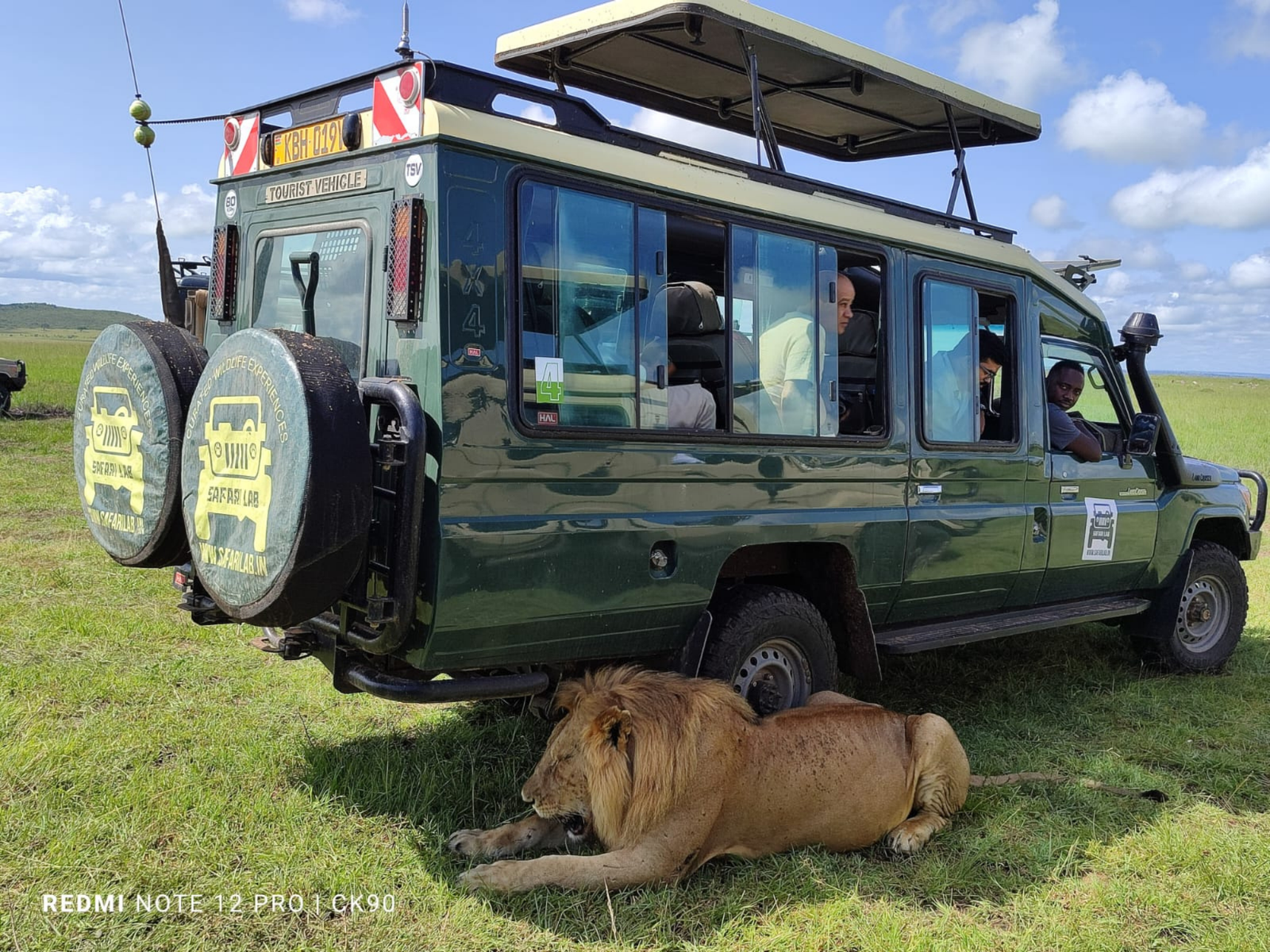
2. Inside the Reserve: pay more for immediacy
Once the budget moves up, staying inside the Reserve becomes attractive because the day begins in wildlife country. There is no daily gate entry commute, and the vehicle can start working immediately.
Sarova Mara Game Camp is a good example of the established mid-range-to-upper-mid-range inside-Reserve product. It is close to Sekenani but still inside the Reserve.
This category suits first-time safari travellers who want comfort, dependable meals and facilities while keeping the safari logistics straightforward.
3. Mara River and migration-positioned camps: location commands a premium
This is where rates usually rise sharply. You are not only paying for the room; you are paying for access to some of the most strategically valuable parts of the ecosystem.
Mara Serena
The only lodge in the Mara Triangle. It is a full-service lodge with immediate access to the western Mara and sweeping views toward the Mara River. It is rarely the cheapest way to do the Mara, but the location can be extremely useful.
Ashnil Mara
Ashnil sits on the banks of the Mara River inside the Reserve, close to key migration sectors. That kind of positioning is precisely why river camps tend to command a premium in migration months.
Other Mara River camps
Many of the best-positioned river camps are expensive, especially in peak migration season. What you are buying is not a guaranteed crossing; you are buying shorter access to the sectors where the action may develop.
4. Conservancies: a different safari product
After the gate areas and Reserve proper, the next step is the conservancies: Olare Motorogi, Naboisho, Ol Kinyei, Mara North and others.
These are usually chosen not simply because the room is more luxurious, but because the safari style changes: lower vehicle density, night drives, guided walks, off-road flexibility where permitted and generally smaller camps.
They can be superb, but they are often substantially more expensive than gate-area stays. Again, budget usually decides whether this layer is realistic.
Best for
Repeat safari travellers, photographers, honeymooners and guests who value low-density game viewing and specialist guiding.
Not automatically “better”
A conservancy is a different experience, not a compulsory upgrade. For a first trip on a tighter budget, three good nights around the Reserve with a private vehicle can be a better buy.
What budget really changes
Lower budget
Look hardest at Talek, Sekenani and Oloolaimutia. You can still get good rooms, food and service while protecting spend for park fees and game drives.
Mid-range
You can start comparing stronger gate-area properties with established inside-Reserve options. This is often the sweet spot for first-time travellers.
Higher budget
Mara River camps, Mara Triangle stays and conservancies become realistic. At this level the premium is often about location, exclusivity and safari style rather than simply room size.
Best by safari style
| Safari style | What we would prioritise |
|---|---|
| First trip | Best balance of budget, gate/Reserve access and three solid Mara nights |
| Family | Good rooms, pool if useful, flexible meals, short transfer to gate and private vehicle |
| Photography | Private vehicle + habitat/location first; room category second |
| Migration | Budget permitting, northern river sectors or Mara Triangle; never a crossing guarantee |
| Honeymoon | Smaller camp, privacy, atmosphere and possibly conservancy |
| Repeat safari | Conservancy, Mara Triangle or split stay for a different style of game viewing |
Questions travellers actually ask
Is staying outside the Reserve a bad idea?
No. Around Talek and Sekenani especially, outside-Reserve camps can offer excellent value, comfortable rooms, good meals and very good service. The key is the actual distance to the gate and how the game-drive day is structured.
Why are Mara River camps so expensive?
Partly because of room standard and service, but mainly because the best river locations are scarce and strategically useful during migration season. You are paying for access, not a guaranteed crossing.
Should I spend more on the lodge or the vehicle?
For most wildlife-focused trips, we protect the private vehicle and the number of useful Mara nights first. A more expensive room does not compensate for a poor vehicle arrangement or too little safari time.
Is a conservancy always better than the Reserve?
No. It is quieter and offers activities the Reserve does not, but it is a different and often more expensive product. The Reserve remains excellent for a first safari.
Related planning guides
How Safari Lab actually shortlists a lodge
We start with the client’s realistic budget, then work outward: gate area, inside Reserve, Mara River or conservancy. Only after that do we compare individual rooms.
That approach usually produces a better safari than starting with a glossy lodge photo and forcing the rest of the itinerary around it.