
Masai Mara Safari Cost in 2026: What Actually Changes the Price?
The useful question is not “What does the Mara cost?” It is “What exactly are you paying for?”
Two Masai Mara safaris can have the same number of nights and still have completely different prices.
That does not automatically mean one operator is expensive and another is cheap.
A quotation may use a shared safari vehicle and a simple camp outside the reserve. Another may include a private Land Cruiser, a lodge in a more strategic location, longer game drives, park fees and private transfers.
They are not the same product.
So instead of asking:
“How much does a Masai Mara safari cost?”
ask:
“What is actually making this safari cost what it does?”
The six things that change the cost most
A Masai Mara safari price is largely built from six variables. Everything else tends to sit around those.
This is also why publishing one universal figure for “a Masai Mara safari” is misleading. A couple travelling privately in August is not buying the same safari as six friends sharing one private Land Cruiser in February.
Park fees are one of the few costs you cannot negotiate away
For non-resident adults, the published 2026 Masai Mara tariff lists:
1 January – 30 June
USD 100per adult, per day1 July – 31 December
USD 200per adult, per dayThis is one reason an August safari can cost substantially more than what appears to be the same itinerary in February.
Family costing note
Child park fees should be checked against the current official tariff when costing a family safari, as age and accommodation location can affect the applicable charge.
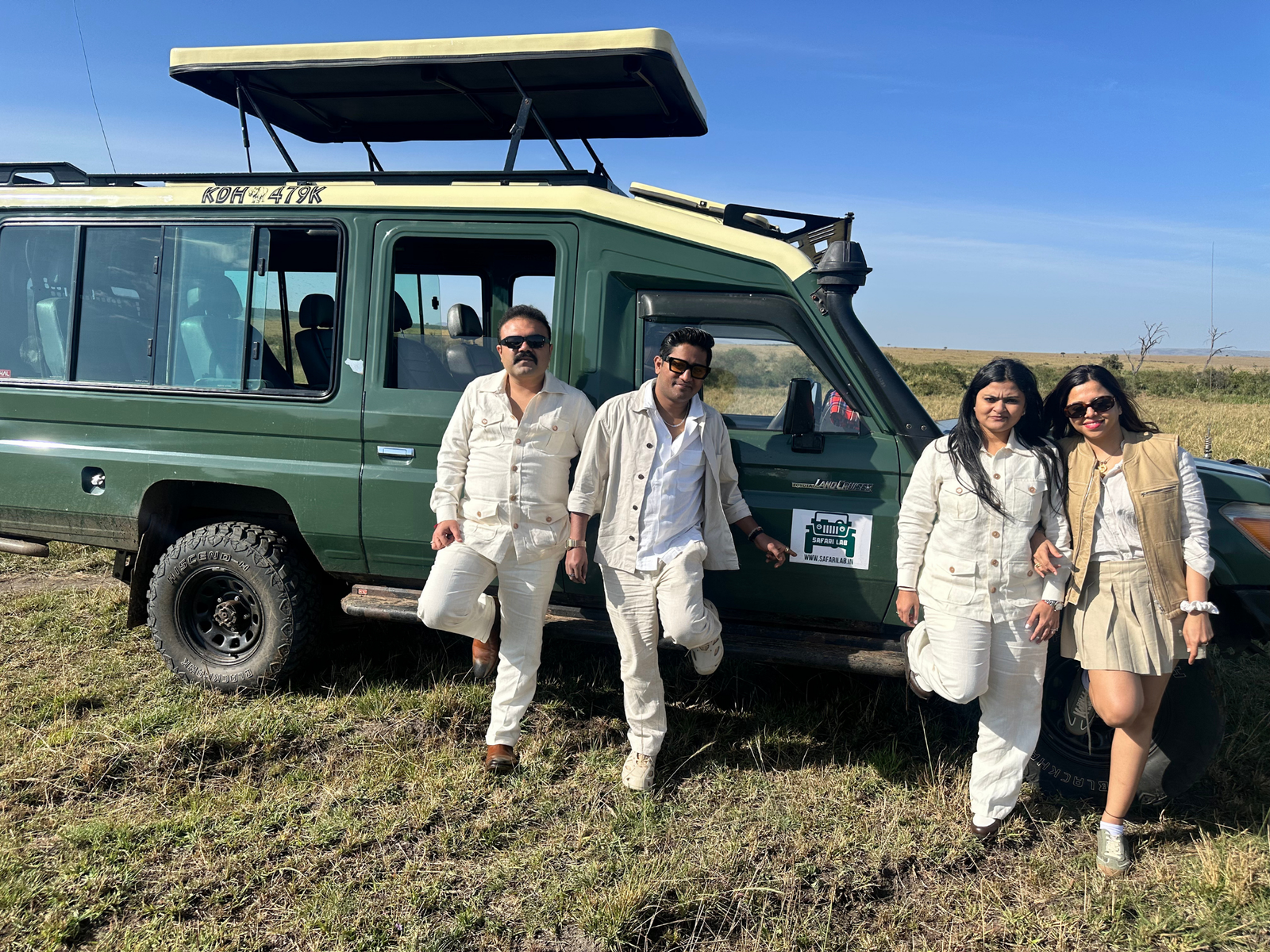
The vehicle is one of the biggest reasons two quotations differ
A private safari vehicle is largely a fixed operating cost.
The guide, Land Cruiser, fuel and operating day do not become three times more expensive because six travellers are sitting inside instead of two.
This is one of the most important concepts in safari pricing. It explains why a private safari can look expensive for a couple but comparatively good value for a family or group of friends.
2 travellers
Higher vehicle cost per person.
4 travellers
The same fixed cost is spread more efficiently.
6 travellers
Lower private-vehicle cost per person again.
Private vehicle
You carry the vehicle cost, but control departure times, sightings, positioning and the pace of the day.
Shared safari
You effectively purchase seats. It can reduce cost dramatically, but departure times, sightings, positioning and the day’s pace become shared decisions.
So when comparing two prices, always establish whether both quotations are based on the same vehicle arrangement. Otherwise the headline numbers are not comparable.
A cheaper lodge does not automatically mean a cheaper good safari
Accommodation is usually one of the largest variables in the quotation. But evaluating safari accommodation only by room quality is a mistake.
Location changes the safari
It affects how quickly you reach productive wildlife areas, how much non-productive driving happens, which gates or sections of the ecosystem are convenient, how the game-drive day operates, and sometimes which additional conservation charges apply.
False economy
A beautifully priced lodge can become false economy if too much prime safari time is spent simply getting to where you actually want to be.
Budget, mid-range and luxury are not simply room categories
A higher safari rate may buy a larger room. But that is only part of it.
Positioning
A better location, fewer rooms and sometimes lower guest density.
Convenience
Conservancy access, included activities, fly-in convenience and more flexible game drives.
Exclusivity
More personalised guiding, fewer guests, more privacy and sometimes a higher staff-to-guest ratio.
Likewise, a well-chosen mid-range property can deliver an outstanding safari without the premium associated with an exclusive camp.
That is why reducing Mara accommodation to Budget / 3-star / 4-star / 5-star does not tell us enough. A safari lodge is part hotel and part operational base for your wildlife experience.
Inside the reserve, outside it and in a conservancy are not identical products
“Masai Mara” is often sold as though every camp operates inside one interchangeable safari area. It does not.
Inside the reserve
Location and access can make game-drive logistics straightforward, but the accommodation and reserve-fee structure needs to be understood.
Outside the reserve
The room may cost less, but access, gate time and daily game-drive structure can change the overall value.
Private conservancy
Conservation charges, activities, included game drives and operating rules can create a different safari product again.
These choices affect not only accommodation pricing but also game-drive rules, conservation fees, access arrangements, activities and how the safari operates.
So compare stay + compulsory fees + vehicle + game-drive arrangement rather than comparing room prices by themselves. Read the detailed reserve vs conservancy guide.
Peak season increases more than one component at once
July and August do not become expensive for only one reason.
The adult reserve fee increases to USD 200 per day from July onward, while migration-period demand also puts pressure on desirable accommodation inventory.
If seeing the Great Migration is one of the main reasons for travelling, that premium may be entirely justified. If the objective is simply an excellent Mara wildlife safari, it is worth understanding what you are paying the peak-season premium for.
Number of nights is not the same as amount of safari
You are paying for useful safari time, not simply hotel nights.
A transfer day may contain only an afternoon drive. A checkout day may contain little or no game driving. Two four-night quotations can therefore provide different amounts of actual safari time depending on the routing.
When comparing cost, count the useful game-drive periods rather than just the number of nights printed at the top.
What is actually worth spending more on?
If the budget is limited, we would generally distinguish between spending that affects wildlife experience and spending that primarily affects comfort.
Usually worth protecting
Vehicle quality
Guide quality
Useful safari time
Sensible location
Often easier to compromise on
Room extravagance, travel season when migration is not essential, and exclusivity when a shared departure genuinely suits you.
A more elaborate room may be enjoyable. But vehicle quality, guide quality, safari time and a sensible location can have a much greater impact on the actual experience.
For many travellers we would rather see a good mid-range lodge + an excellent private vehicle than a very expensive lodge + a restrictive shared safari arrangement.
That is not a universal rule. But it is the kind of trade-off that should be considered before simply moving up or down a hotel category.
Why the lowest quotation can easily be the wrong comparison
Suppose you receive:
Quotation A
Quotation B
At first glance, A wins. But then you discover that A excludes park fees. Or uses a shared vehicle. Or has fewer actual game drives. Or uses accommodation much farther from the area you want to explore. Or leaves compulsory conservation charges outside the headline figure.
So before deciding whether a safari is expensive, establish what the price actually contains.
A better way to compare safari prices
Check the underlying safari first. Then compare the final numbers.
Then compare the final numbers. Not before.
What makes a genuinely budget-friendly safari?
A sensible budget safari does not need to be a poor safari.
Sensible places to save
Accommodation luxury
Season
Sharing fixed vehicle costs
Shared departures when flexibility is not important
Be careful cutting
Guiding
Vehicle reliability
Location
Useful safari time
Those four directly influence the experience you travelled to the Mara for.
What makes a safari genuinely expensive?
At the opposite end, a premium safari may include much more than an expensive tent.
You may be paying for exclusivity, location, very low room counts, exceptional guiding, a private vehicle, conservancy access, included activities, flights, premium food and drink, privacy or unusually flexible operating arrangements.
Whether those are worth the money is personal. But you should be able to identify what the premium actually buys.
There is no meaningful universal “Masai Mara safari price”
There is no honest single number because the underlying products vary too much.
Instead, a useful safari cost needs to be calculated once we know:
Season + travellers + vehicle + accommodation + location + safari duration + compulsory fees
Once those variables are fixed, comparing prices becomes meaningful. Before that, two operators may simply be quoting two different safaris.
Planning this with Safari Lab
Safari Lab plans customised Kenya wildlife safaris by costing the lodge, private vehicle, park fees and route together rather than treating each item as a separate headline price.

4.9/5 · 157 reviews
Frequently asked questions
Why is a Masai Mara safari more expensive from July to December?
The non-resident adult reserve fee rises from USD 100 to USD 200 per day, and migration-period accommodation demand can also be stronger.
Is a private safari much more expensive?
It can be for a couple. The difference reduces considerably when a group shares the fixed vehicle cost.
Is a shared safari bad?
No. It can be very good value. The trade-off is control over timing, sightings, positioning and the pace of the day.
Is staying outside Masai Mara always cheaper?
The room may be cheaper, but the complete safari needs to account for access, driving time, park fees and the game-drive plan.
Is luxury accommodation necessary?
No. A well-chosen mid-range lodge can deliver an excellent wildlife safari. Luxury becomes worthwhile when the features it adds matter to you.
What should I compare between two safari quotations?
Vehicle arrangement, accommodation location, actual safari time, compulsory fees, inclusions and exclusions — not simply the final total.
Bottom line
A Masai Mara safari should not be judged as expensive or cheap in isolation.
It should be judged as expensive or cheap for what is actually being provided.
A lower quotation can be poor value. A higher quotation can be excellent value. And the reverse can be true.
The only useful comparison is between two safaris whose underlying components are genuinely comparable.